Friday, March 18, 2011
Разум и Мудрость
Разум и Мудрость оказались в темной пещере. Куда идти?
Разум говорит: "Надо идти в ту сторону, где светлее".
Мудрость после размышления сказала: "Я пойду туда, где темно".
И каждый пошел в свою сторону. Разум идет, идет - ему все светлее и светлее. Так и вышел из пещеры.
Встречают его люди: " А где Мудрость? Почему ты бросил ее в пещере?".
" Она пошла в другую сторону" - отвечает Разум.
" Как? Почему она пошла в обратную от выхода сторону?" - удивились люди : "Что-то здесь не так!".
Собрались они, взяли факелы и пошли в пещеру. Идут люди, идут - все темнее и темнее становится. Вдруг видят впереди свет. Подошли ближе, а это - второй выход и рядом с ним сидит Мудрость, их дожидается.
" Ах как не хорошо поступил Разум, что оставил тебя одну!" - сказали люди.
А Мудрость им ответила: " Если бы Разум не пошел к первому выходу, мы никогда не узнали бы о втором!".
Мудрость всегда находит истину, а Разум никогда не дает истине ускользнуть от человека.
Wednesday, March 16, 2011
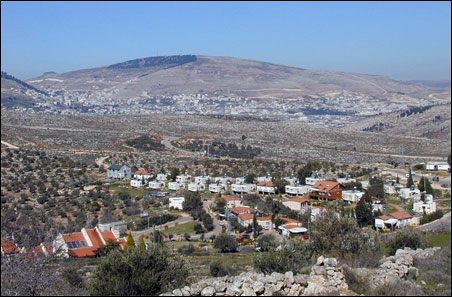
My Neighbors Were Murdered . . . The Fogels of Itamar
![]() |
“Yes, sweetheart, you can go,” I say. “Just make sure you’re back by 10:15.”
Unusually for me, I am too tired to wait for Binah and her older brother, who went to a friend’s house for the entire Shabbat meal, to return home. After clearing the table, I retire to my room and sink into a deep sleep.
![]() |
| Imatar, Israel |
At 2 AM, my husband jumps out of bed. My oldest daughter is calling him. Soldiers are at the door.
“Is everything O.K.?” I call out sleepily.
My husband checks on all the children; they’re all safely at home. He reports back to the soldiers.
“What’s going on?” I ask.
“Some kind of security incident,” he replies. “They’re checking up on all the families to make sure that everything is okay. I think we’d better say Psalms.”
I get up and join my husband in prayer, concentrating on the positive verses and mentally blocking out all the verses that seem to insinuate evil tidings. “Think good and it will be good,” I tell myself.
From time to time I look out of my bedroom window. To the side, I can see military vehicles driving up in the direction of the newly built houses at the other side of the village—an unusual sight on Shabbat for the religious community of Itamar. This is obviously a case when profaning the sanctity of Shabbat is permitted: lives are clearly in danger . . .
Military flares are exploding in the dark night sky above, illuminating the hills around us, a sure sign that the army is searching for somebody or something ominous out there. I continue saying Psalms, trying to fathom from the familiar, calming words whether all is good, or not; but I am no prophetess.
I see a group of soldiers walk across the synagogue courtyard just beneath my window, wearing helmets and bullet-proof vests, guns at their sides.
The flow of vehicles continues. Military jeeps and ambulances are now rolling out of the village. I notice civilians walking quickly to the village offices, which are also in view from my window. During times of danger the offices serve as headquarters for the emergency task force which collects and relays information to us citizens.
Seeing the civilians walking freely outside, I realize that the incident has come to its end. Maybe now we can learn what happened. I am still optimistic.
My husband spots a friend and walks down to greet him. Through the window I watch them embrace in a bear hug. I try to discern from their motions whether all is well. An hour has passed since we awoke.
Exhausted, I crawl back into bed, waiting for my husband’s return with news.
At long last he comes in but stands there in silence. Something is clearly not right.
“Is anyone injured?”
“Yes,” he replies quietly, and adds no more. I recognize that if he could, he would ensure me that nobody had been killed. I am dumbfounded.
“Terrorists infiltrated the village and broke into one of the houses,” he tells me slowly, and is silent once more. Unfortunately, in the twelve years that we have lived here, Itamar has known too many similar incidents.
“Was anyone saved?” I ask him haltingly, well-versed in the ramifications of such an occurrence, but wishing only to hear good to the same extent that he wishes to refrain from telling me of the evil.
“Three of the six children were saved.” I instantly derive that the parents, too, were not spared.
Not wishing to leave me groping for questions any longer, he adds, “There were five killed altogether, the Fogels . . .”
A chill grips my heart.
It’s Shabbat, I tell myself. Try not to cry on Shabbat.
I try to defeat the tears that threaten to overwhelm me with the power of my mind, by regulating my breathing to the rhythm of a chassidic meditation. I toss and turn in bed. Sleep evades me for the next few hours. Towards dawn I finally fall into a short, fitful sleep, dreaming strange dreams.
I wake up at 7 o’clock to the sound of my children’s voices, hoping ever so briefly that last night was nothing more than a horrific nightmare. Alas.
My husband is already in synagogue, praying in the early service, as he does every day. I must get up to tell the children before they run down, too, and hear the shocking news from other sources.
“The Shabbat gathering I went to last night was at the Fogels!” Binah tells me through her tears, as I sit with her on her bed. “We all left there together andTamar [Fogel] was with us!”
“That’s why she was saved,” I reply, gently caressing her.
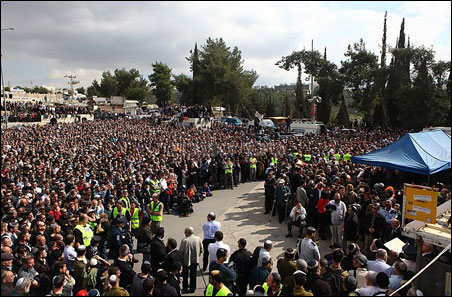
Throughout Shabbat everything centers on the terrorist attack that left Tamar and two of her younger brothers so dreadfully orphaned at such an early age.
“Mrs. Fogel was helping to organize the celebrations for the Talmud Torah [boys’ school]’s twentieth anniversary,” my fourteen-year-old son tells us with tears in his eyes. This year, until baby Hadas was born, Ruth Fogel had been working as the secretary for the school while the regular secretary was on maternity leave.
![]() |
| The Funeral |
“Last year she was form tutor for the other ninth-grade class,” my now tenth-grade daughter tells us. “She taught us, too . . .”—and, I remember now, Mrs. Fogel would often give my daughter a lift to school.
After the morning prayers each of the children goes off to a specially arranged meeting with their familiar educational figures from the village and professionals in trauma treatment. There they hear the whole story in a way that is supposedly suited to their age (is there really a way to tell young children that their schoolmates and their parents have been brutally murdered in cold blood?!)
Although I hardly knew the family myself, that doesn’t help ease the shock, horror and pain that I share with my children, with my community, with my people. And, I remind myself, G-d says He shares our pain with us, too: “In all their troubles, He is troubled” (Isaiah 63:9)
Tuesday, March 15, 2011
Весна.... любофф... стихи
Весна весна на улице, веселые деньки.... кто из нас воспитывающийся на территории великого могучего не помнит эти веселые строки А. Барто?
В зоопарке весной над проталинками,
Где звенела синиц перекличка,
Слон слонихе шепнул: - Моя маленькая
Слон слонихе шепнул: - Моя птичка...
И от нежности,будто на цыпочках,
Где то-там,
Средь Антарктики бурной,
Кит китихе сказал:
-Моя рыбочка,
До чего же вы миниатюрны!
И под влажной землей
В темной горнице
Так по рыцарски тонко и кротко
Крот кротиху назвал Сизой горлицей
И назвал своей белой лебедкой.
А под ветром весны
Каждой часточкой
Лес апрельский подрагивал тихо.
- Подойдите ко мне,
Моя ласточка, -
Робко хрюкнул кабан кабанихе.
Эти взлеты и нас озадачили,
Прозаичных порой и тяжелых...
До чего же мы бываем незрячими -
Представители сильного пола.
Шла весна,словно миф о бессмертии.
И сегодня я понял впервые:
Женщин нет некрасивых,
Поверьте мне,
Есть лишь только мужчины слепые.
Правда весны еще не совсем много на наших улицах, но в воздухе уже что-то такое есть...
Коллега на работе, ждет не дождется когда потеплеет чтобы цветы высадить на свежий воздух...
Подруга ждет тепла, чтобы по соседним улицам бегом тренироватъся к будущему марафону...
Племяшки ждут весны - новые велосипеды застоялись с зимы...
И шедевр.... тут на днях общаясъ с народом услышала фразу "Скорее бы весна, так влюбитъся хочется!" ... и такой полный грусти вздох... Кому чего.:)))))))))
Ну и соответственно стишок неизвестного (пока) мне аФФтора о мужчинах, для мужчин.
Где звенела синиц перекличка,
Слон слонихе шепнул: - Моя маленькая
Слон слонихе шепнул: - Моя птичка...
И от нежности,будто на цыпочках,
Где то-там,
Средь Антарктики бурной,
Кит китихе сказал:
-Моя рыбочка,
До чего же вы миниатюрны!
И под влажной землей
В темной горнице
Так по рыцарски тонко и кротко
Крот кротиху назвал Сизой горлицей
И назвал своей белой лебедкой.
А под ветром весны
Каждой часточкой
Лес апрельский подрагивал тихо.
- Подойдите ко мне,
Моя ласточка, -
Робко хрюкнул кабан кабанихе.
Эти взлеты и нас озадачили,
Прозаичных порой и тяжелых...
До чего же мы бываем незрячими -
Представители сильного пола.
Шла весна,словно миф о бессмертии.
И сегодня я понял впервые:
Женщин нет некрасивых,
Поверьте мне,
Есть лишь только мужчины слепые.
Скорой весны вам дорогие!
Дайте мне другой глобус! (с)
Пока весъ мир смотрел захватывающие дыхание кадры ужасных последствий разбушевавшийся стихий, в маленьком городке, который то и на карте даже не найдешь бушевали совсем другие стихии. Зло, ненависть, нечеловеческое зверство.
В религиозном городке Итамар, Самария, Израиль - неизвестные зверски убили Уди и Рут Фогель. Родителей 6-х детей, трое из которых погибли вместе с родителями в пятницу вечером 11 марта, 2011. Пятница вечер в любой религиозной семье - встреча Шабата. Праздник мира, покоя и любви. Около 10:13 и 11 ночи, неизвестные преступники через окно залезли в дом, где безжалостно уничтожили 5-х членов семьи, родителей и троих детей. Двоих чудесным образом преступники не заметили. Старшая дочь Тамар была в гостях. Друзья, родственники и жители страны пребывают с состоянии шока. Какие монстры убивают 3-месячного ребенка???? Кто безжалостно ножом убивает 3-х летнего и перерезает горло у 11-летнего мальчика???? А потом заперев дом изнутри через окно скрываются в ночи.
12-летняя Тамар, вернувшись домой обнаружив запертые двери позвала на помощь соседей. Шум разбудил 6-летнего малыша, который открыл им дверь. На крик сбежались все, но помочь чем-то уже было поздно... Страшная картина наверное будет до конца дней жизни стоять перед глазами детей...
Смотря фотографии того что произошло в тот вечер понимаешь что надо потерятъ абсолютно все человеческое чтобы такое сделатъ. Но ужасное видетъ людей танцующими на улицах Газы и раздающих конфеты, те же самые которые танцевали когда 3000 американцев погибли 9/11.
Реакция этих людей удивляет, возмущает, поражает в самое сердце...
Хочется закончить словами одного из ведущих теле-и радио програм - "Зло оно велико, и мы живем во время когда мы будем отвечатъ перед Богом за то что мы делаем или наоборот не делаем. Зло оно большое, но Свет обязательно больше."
Свет действительно больше, сильнее и могущественее чем все зло вместе взятое. И мое обращение ко всем, присоединись к Свету, ведь сотни маленьких светильников вместе принесут свет в наш темный и злой мир.
Friday, March 11, 2011
Билет в один конец

- Мама, вот балычок, пирожное, чай, как ты любишь, с лимоном. Сиди здесь, никуда не уходи. Я пойду, позвоню.
- Лида, мама на вокзале в буфете. На каком, на каком. Во Владивостоке на вокзале, тебя ждет. Я взял себе билет «туда, обратно», а ей в один конец. У меня через пятнадцать минут поезд на Москву. Слушай и не перебивай. Я знаю, ты не хотела, чтобы она жила с тобой, но у меня безвыходное положение. Дела сложились так, что я должен продать квартиру. Какая теперь разница родительская, не родительская. Нет, мать не знает ничего, и ты особо не распространяйся. Говорю же, дела так обернулись. В общем, хватай машину и срочно на вокзал. У неё денег около тысячи и записка с твоим адресом. Будь здорова!
Джип, рассекая фарами утренний приморский туман, нёсся к вокзалу. За рулем сидела красивая женщина, проклиная и этот ранний утренний час, и густой туман, и так некстати приехавшую из Москвы мать.
В обратном от вокзала направлении, пробивая мощным прожектором туманную мглу, шел поезд «Владивосток - Москва». В купе сидел элегантный мужчина и, будто оправдываясь, пытался убедить себя в том, что матери будет лучше и спокойнее жить у дочери. Не мучить же, в самом деле, старушку переездом с насиженного места в новую квартиру, где все ново, и ей, наверняка, не доставит никакого удовольствия это современное элитное жилье.
На вокзале у буфетной стойки стояла пожилая женщина в старомодном пальто, откусывала маленькими кусочками пирожное, запивала его крепким чаем и по детски наивно разглядывала, спешащих куда-то людей.
(с) неизвестен
Monday, March 7, 2011
Моим друзьям
Берегите друзей
Знай, мой друг, вражде и дружбе цену
И судом поспешным не греши.
Гнев на друга может быть мгновенным,
Изливать покуда не спеши.
Может, друг твой сам поторопился
И тебя обидел невзначай
Провинился друг и повинился,
Ты ему греха не поминай.
Люди,мы стареем и ветшаем
И с теченьем наших лет и дней
Легче мы друзей своих теряем,
Обретаем их куда трудней...
Если верный конь, поранив ногу,
вдруг cпоткнулся, а потом опять,
Не вини его, вини дорогу,
И коня не торопись менять.
Я иных придерживалcя правил,
В слабости усматривая зло,
Сколько в жизни я друзей оставил,
Сколько от меня друзей ушло...
И теперь я всех вас видеть жажду,
Некогда любившие меня,
Мною не прощенные однажды
Или не простившие меня.
Я прошу вас, люди, ради Бога,
Не теряйте доброты своей,
На земле друзей не так уж много,
Опасайтесь потерять друзей!
(c) Расул Гамзатов
Sunday, March 6, 2011
Friday, March 4, 2011
Who Are You, Generation Y?
Некоторое время назад прочла интересную (на мой взгляд) статью, которая расматривает интерснейший вопрос. Вопрос нашего поколения. Статью написал человек лично мне знакомый, поэтому я точно знаю что при написании было использовано множество литературы, это так же много часов поиска и личных наблюдений. Автор в будущем обещал перевести на русский язык, ну а пока предлагаю вашему вниманию на английском языке.
Who are you, Generation Y?
Our generation has many names – Generation Y, Millennial, Generation Next, Internet Generation, Generation Waking Up, Generation Google, Einstein Generation, Generation ADHD, Ritalin babies. All those names reflect the world in which we grow up, born between the 80's and the late 90s – the world of the Internet, iPods, UTube, MySpace. We never have trouble multitasking; we can watch television, solve puzzles, listen to music, talk on the phone, and find the information we need on the web at the same time. With all the technology and improvements, what we are lacking is independent thinking. We are accustomed to have our problems solved by others, and we are relying on our best teacher – Hollywood.
The psychology of our generation, like all previous ones, has been formed by the events, leaders, heroes, incidents and trends of its time. The Millennium Generation is the first generation that grew up with the Internet. It is a significant key in shaping us the way we are. Network gave us access to different sources from music recordings to online chat rooms. Also we can create our own places for performances, conferences and forums, debate and expression. Thanks to the World Wide Web we had an opportunity to receive the latest information at the time of global crises, reducing the planet to the size of iPod’s screen.
We love people, we are quite active in our communities, and we frequently involve ourselves in volunteer work. Due to the development of electronic technology, Internet, mobile phones, iPod, we love to talk; social connections are very important to us. But we are missing the personal, deep relationships. We want what shows on TV – a perfect job, marriage, family – but we have a commitment-phobia. Our parents have the highest divorce rate out of any generation. After observing such rifts, we want to get it right. We want to avoid the divorces, scandals and general all around crap.
Through globalization the Gen-Ys in the world are not much different from each other. The world no longer has clear boundaries, all merged into one stream of information. Before, the groups to which you belong were very clearly separated. Now, our best friend, our boss and our parents are all connected in the same social network. So when we update our status on Facebook, we hung out with them all at once.
Our generation Y has access to the most diverse and rich information on any topic. We believe what we hear, but there is a downside in all knowledge. There is no more mystery for us – everything seems predictable. We can foretell what will happen at the end of the movie without seeing the end. We don’t have the ability to focus on something long enough to get a thorough understanding. For example, we get bored or lose focus so easily that we quit reading and skim for what immediately answers our question, right or wrong, leaving no room for nuanced answers. According to Sophia Yan, “In 2004, Pediatricsmagazine published an important study that suggested frequent television watching was likely to produce impulsive and restless behavior.” It’s never enough for us. Patience is not in our vocabulary. We read, we watch television, we surf the internet, but we are not inclined to analyze and re-examine our findings. We focus on the results, but we cannot see the big picture of the future.
Unlike other generations, our generation is optimistic and creative. Our mentality is hardly controlled by any limitations. By looking at the speed of development of modern technology, for us, Gen-Ys, nothing is impossible – if not today, for sure tomorrow. Make our dreams come through and reach our goals are well known to us. There is no long-term commitment, but rather we’re involved with the project to achieve that goal, and don’t find it necessary to stretch it out further. We don’t see the point in staying in a relationship that isn’t mutually beneficial. A prestigious job and a high position are not a dream anymore. We are growing horizontally rather than vertically. Instead of climbing up the vertical ladder, more likely, we’ll try to get a broader experience in several different areas.
We want to get maximum enjoyment out of our life, develop our unique personalities, and try everything. We value our time. Every minute is on the schedule. Asking a specific question, Gen-Y always wants to get a direct answer and doesn’t like to listen to lengthy abstract reasoning. We are a confused generation with a lack of attention. We rush, run, choose, and we try to do everything, but we can’t understand ourselves and set our priorities. And since we don’t know what we want, often don’t do anything.
As a true Gen-Yr you may ask, “Why write a long essay? Who is going to read that? Just give us main points and move on.” If that’s what you want, here are few facts:
· We’re a generation of Attention Deficit Hyperactivity Disorder.
· We’re skeptical of marriage and have a commitment-phobia.
· We’re impulsive, impatient and restless.
· We easily lose attention and focus.
· We’re a confused generation with scattered brain.
· We’re self-centered and self-oriented.
We are hiding behind a façade to cover who we really are. We tell everyone that we’ll be the first, in demand, and multifaceted. We don’t want to listen to previous generations. We don’t want to be their clones. We say that we don’t need interpreters and mediators, borders and fences. Our house is the whole world. We’re not afraid to be successful, not ashamed of our achievements and embarrassed of our mistakes. We say, “Those who don’t make mistakes don’t make anything,” but we forget that “a fool learns from his mistakes and wise man learns form other’s mistakes.”
Does it all sounds like a little kid trying to prove himself? Wants to show to the whole world that he worth of something? Or like a teenager wanting and not receiving enough attention from adults? Of course teenagers are “cool”, nothing seems to bother them. They are wearing a prefect mask of indifference, apathy and lack of interest. Unless you dig deep in their soul you wouldn’t find how much they want opposite of what they show. Today, peer group pressure is a major problem for us, caused by influences imposed by others and our wanting to fit into certain groups. Although we say there are no more boundaries, we’re special and unique as individuals, but we tend to look up to the Hollywood – its standards of success, beauty, happiness – and we try to imitate that.
Who are we as a generation? Is it true what the world says about us? Are we really that smart, knowledgeable and experienced in life that we don’t want to take advice from previous generations? What about history that tends to repeat itself? Are we ready to take the world in our hands and make the right choices? Can we look into the future and change anything? Or it’s all true what they say – we only focus for nanoseconds? We’re still young in our early thirties, twenties, and teens. It’s not like we’re trying to teach new tricks to the old dog. Of course, time will put everything in its places. The main thing is that we won’t regret lost time and opportunities that we can’t return.
Thursday, March 3, 2011
Четыре свечи
В темной комнате медленно горят четыре свечи. Вокруг царит тишина, и если прислушаться то можно услышать их разговор.
Первая свеча сказала:
- Я - Мир. Но никто не поддерживает мой огонь. Думаю, что я погасну.
Пламя этой свечи стало постепенно уменьшаться, и наконец свеча погасла.
Вторая свеча сказала:
- Я - Вера. Во мне больше нет нужды, поэтому мне нет смысла гореть.
Как только она перестала говорить, подул легкий ветерок и погасил ее.
Затем грустным голосом начала говорить третья свеча.
- Я - Любовь. У меня нет больше сил гореть. Люди отвергают меня и не понимают всей важности моего существования. Они даже забывают любить своих близких.
И она тоже погасла.
Вдруг в комнаты вошел маленький мальчик. Он увидел, что три свечи уже не горят.
- Почему вы погасли? Вы должны были гореть до самого конца!
Сказав это мальчик горько заплакал.
Тогда четвертая свеча сказала:
- Не плачь! Пока я горю, мы снова можем зажеть другие свечи. Ведь я - Надежда.
С радостью в глазах ребенок взял свечу Надежды и зажег остальные свечи.
Огонь Надежды никогда не должен гаснуть в вашей жизни. И пусть нас всегда освещают Вера, Мир и Любовь.
Wednesday, March 2, 2011
Ester'ke - The Purim story
It was late Shabbat afternoon, that magic moment between dusk and darkness. The visitors had gone. The baby was already sleeping. Soon the lights would go on. My father and my brother would be home from Shul. There would be a call for the Havdalah candle, wine and spices, and the workweek would begin.
But for the moment it was Shabbat--Shabbat peace, Shabbat stillness. I curled up next to my mother on the living room couch, and begged, "Tell me a story. Tell me about myself when I was little."
And my mother began:
You were born in a very difficult time, a sad and bitter time for our family, for the Jewish people. Wicked Hitler was on the march across Europe . Like Haman before him, he had sworn to destroy us, to kill every Jewish man, woman and child who lived on the face of the earth.
Hitler's armies had not yet reached Hungary . He had not yet arrived in our town. We had heard terrible stories, things we didn't believe, couldn't believe. But I was young, not much more than a girl, and I had just been blessed with my first baby. Forgetting all our troubles, I waited eagerly for the nurse to bring my baby to me. I sat in the large hospital bed, and watched the nurses bring the other women their babies.
Finally, a nurse came walking toward my bed, holding a small bundle wrapped in a flannel blanket. What a beautiful baby you were: Your eyes were big and blue in your small rosy face. Someone had tied a matching blue ribbon into your fuzz of brown hair.
"Oh, give her to me!" I cried. "Please, let me hold her!" But the nurse, a heavy-set woman with small, hard eyes, did not smile.
"Take her," she said shortly, dumping you roughly at the end of the bed. "I don't know why we have to bother with these Jewish brats." I must have gasped, because she looked straight at me and repeated. "These Jewish brats. They are a waste of time and money. Hitler will take care of all of you before the year is out."
I couldn't answer her. I just held you tight in my arms and cried and cried.
"There, honey, don't let that old witch upset you." It was the woman in the bed next to mine. She was a rosy-cheeked farmer's wife with graying hair. "Come on, let's have a look at your baby. Oh my, oh my; isn't she cute. What a pity..."
Suddenly, she sat straight up in her bed, and spoke to me with great earnestness, "Listen to me, listen to me, Mrs. ...."
"Mrs. Rosenberg," I supplied.
"Listen, Mrs. Rosenberg. Let me have her." Her heavy face was flushed with excitement. "Let me take her. Why should she die, the innocent babe? I swear to you, I will care for her as if she was my own. I never had children, you know. Give her to me."
I stared at her in amazement. "What do you mean? What are you saying? How can I give her to you? She is ours. She is a Jewish child and we will raise her, G-d willing, as a Jewish child."
"You won't raise her." The friendliness was gone from her face. "That poor babe, she hasn't got a chance. There won't be any Jewish kids left when Hitler gets here."
"Don't be so sure," I answered uncertainly. "Don't be so sure. This is not the first time they have tried to destroy us." And suddenly I remembered. I remembered that it was Purim that day.
Purim was your birthday. It was a sign, I thought, a sign from Heaven, that my baby was born on the very day that Haman met his downfall. It was the day that was transformed from darkness to a great light. I was suddenly filled with courage and confidence. "In every generation they have risen up against us to destroy us, and G-d has always saved us from their hands. And He will again. He will again!"
My neighbor continued to reason with me, but I was no longer listening. I was thinking about my baby's name.
Your father came to visit me that afternoon. How good it was to see him, his megillah tucked under one arm, a bag of kosher food in his hand! My first words to him were, "Avrom, I know what our baby's name will be. She will be Esther, Esther Malka."
Your father nodded. "Esther. Esther Malka. A beautiful name, a good name." Gently he stroked your little head. "G-d will surely help."
And that is how you got your name. To us your parents, to our relatives, to all the people who knew you, your name held a special meaning. It meant hope. It meant faith. "Ah, Esther'ke. Esther Malka," people would say, smiling down at you. "A beautiful name, a good name." And then they would sigh, "G-d will help. G-d must help."
Indeed, we needed G-d's help desperately in those days. Hitler's armies entered Hungary . By the time you were two years old, we were forced to leave our homes, and we were living in the ghetto. What is a ghetto? It was a kind of prison. There was a section of the city that was surrounded by walls and guarded by Nazi soldiers. Young men like your father were marched out at the point of a gun to work for the Nazis. Otherwise no Jew was allowed to leave the ghetto walls. And inside those walls we lived, crowded together, many families in one apartment. We lived with cold, hunger and fear. Many became sick and died. Others were taken away by the Nazis and never heard from again.
That is how you lived and grew in the ghetto. You were a pale, thin little girl with wide, anxious blue eyes. There were so many things you could not understand.
And then it was Purim, your third birthday. Your father and I were determined that this one day you would have a taste of Purim joy, that you would laugh, have some fun. We planned it all carefully. That morning before your father left with the workers, I sewed a pair of gold earrings inside his jacket. He would trade these with the farmers for flour, sugar, and dried fruit. We would have hamantashen. After he had left, I found a torn lace curtain. It became your gown. From cardboard and old wrapping paper, I fashioned a crown. Your costume was ready. When the men returned from work, people gathered in our house to hear your father read the megillah. How little it takes to make a child happy! You wore your costume like a queen. I had let your hair loose and brushed it until it shone. Your eyes sparkled under your crown. Your cheeks were flushed with excitement. In your happiness, you were the center of attention. People smiled, and cried. They were remembering other Purims in better times. Every time your father read the name Esther HaMalkah ("Esther the Queen") the other children smiled at you. You stood very proud, very serious. The megillah was your story. That night, as I tucked you into bed, rosy and happy, stuffed with hamantashen, you murmured sleepily, "I'm lucky I am Esther."
But that was the last happy day I can remember in the ghetto. Things got worse and worse. Every few days now, German soldiers rounded up terrified Jews and forced them into cattle cars. They never returned. Finally, the day came when we realized that we had to send you away. The plan was to smuggle you out of the ghetto, and send you far away to the countryside, to one of the little villages so poor and small that it was forgotten, even by the Germans. There you would live with a peasant family until the war was over. For a sum of money, the last we had, they might agree to take in a Jewish child, and ask no questions.
When you woke up that morning, I had all your clothing packed in a large satchel. The young man who was going to take you was already waiting, sitting patiently in the corner. As I dressed you hastily, I tried to explain. I told you that the young man was a friend. He would take you to a place where there were no soldiers and no guns, where you could eat all the potatoes and bread you wanted.
You asked, "Are you and Tati coming with me?"
I told you we were not. Then I gripped you by the shoulders and spoke to you very sternly. "Remember one thing. You are not called Esther anymore. Your name is Eva. Say it again. Eva. No matter who asks you and when they ask you. Nobody must know you are a Jewish child. Do you understand?"
You were only three years old, and you didn't understand. You burst into loud sobs. "You won't come with me. Tati won't come with me. And I can't even have my name."
I tried to think of words that would comfort you. But none came to me. Besides, I was afraid that if I spoke, I would be crying along with you.
Then I heard the young man speak. "Come here, Ester'ke." His voice was calm and friendly. "Come, I want to tell you a secret." You stopped crying, and regarded him curiously. Tall and blond, dressed in the rough clothing of a peasant, he looked like a gentile. But he spoke to you in Yiddish, and his eyes were Jewish eyes, kind and sad. "You're not leaving your Tati, your Mommy, or your name. Not really. You will keep them all with you, here." And he pointed at your heart. "And at night, when you are alone, in bed, you will say the Shema and you will think of them, your mother, your father and your Jewish name. But you won't tell anyone. It will be your secret. And one day, your mother and father will come and get you, and bring you home again."
"And you, do you have a secret?" you asked him. He nodded. "Yes, I do, Es... I mean Eva. Yes I do." You left me then, holding tight to the hands of your new friend. Your face was smudged with tears. But you went quietly, won over by a sucking candy and a new doll.
For many, many months, we did not hear from you. Towards the end of the war, roads and bridges had been bombed, and we were cut off from the countryside. Somehow, through many miracles, we survived, your father and I. Many, many Jews, millions of Jews, did not. Then, the war was over. The wicked Nazis were destroyed. Like all the Jews who survived we tried to put our life together again. Our one thought was to find you.
We set out for the village where we had sent you. We walked ten miles by foot. The railroads were down and there were no trains. And as we walked, we prayed. We prayed that we would find you safe. We knew that many villagers had driven out the Jewish children that they had agreed to shelter. Others had handed them over to the Nazis. We also knew that there were villagers who had grown to love the children in their care and did not want to give them back to their parents. And the children themselves were often too small to remember that they had Jewish parents.
Torn between fear and hope, we made our way down the dirt road that led through the village. We decided that we would not tell you all at once that we were your parents. It might frighten you. We would make friends with you, slowly. We would win you over. Gradually, you would remember.
Suddenly, we caught sight of a child, a small, sunburned girl with matted brown hair and bare feet. She was playing in the dirt in front of a house. Our hearts leaped. It was you. "Little girl," your father called in a trembling voice, "come here."
You came over and stared at us with wide, wary blue eyes. You stood there with your thumb in your mouth. How can I describe how I felt? My heart sang with gratitude to G-d because we had found you, healthy, alive. But there was no welcome, no recognition in your eyes. You had forgotten us completely. Suddenly, you turned and ran into the house. "Ma," you called to someone inside. "There are people here, funny people. They're outside."
A small woman in a black kerchief came out. She was holding you tightly by the hand. Her face was blank, stony. She looked us up and down, our pale faces, our dusty city clothing.
Suddenly, I was frightened. She was holding you so tightly, as if you belonged to her. I remembered the woman in the hospital who had said, "Give her to me." I forgot all our plans. I forgot that we had decided to tell you slowly, gradually.
"Ester'ke," I burst out. "Esther Malka. It's Mommy and Tati! Don't you remember us?"
You froze. You stared at me, without moving. Suddenly, your face changed. You seemed to awaken from a dream. Recognition flared in your eyes. With a little cry, you tore your hands away from the woman who held you, and you were in our arms.
It had grown quite dark while my mother was talking. She stirred, glanced at the clock on the wall, Shabbat was over. But I wanted to prolong the moment, to make it last a little longer.
"How come," I asked, "How come I forgot everything--you and Tati and being a Jewish girl--and remembered only one little thing, my name?"
My mother rose to take out the spices, the Havdalah candle and the wine cup. "I guess," she said, "I guess because a name, a Jewish name, is not a little thing after all."
Subscribe to:
Posts (Atom)